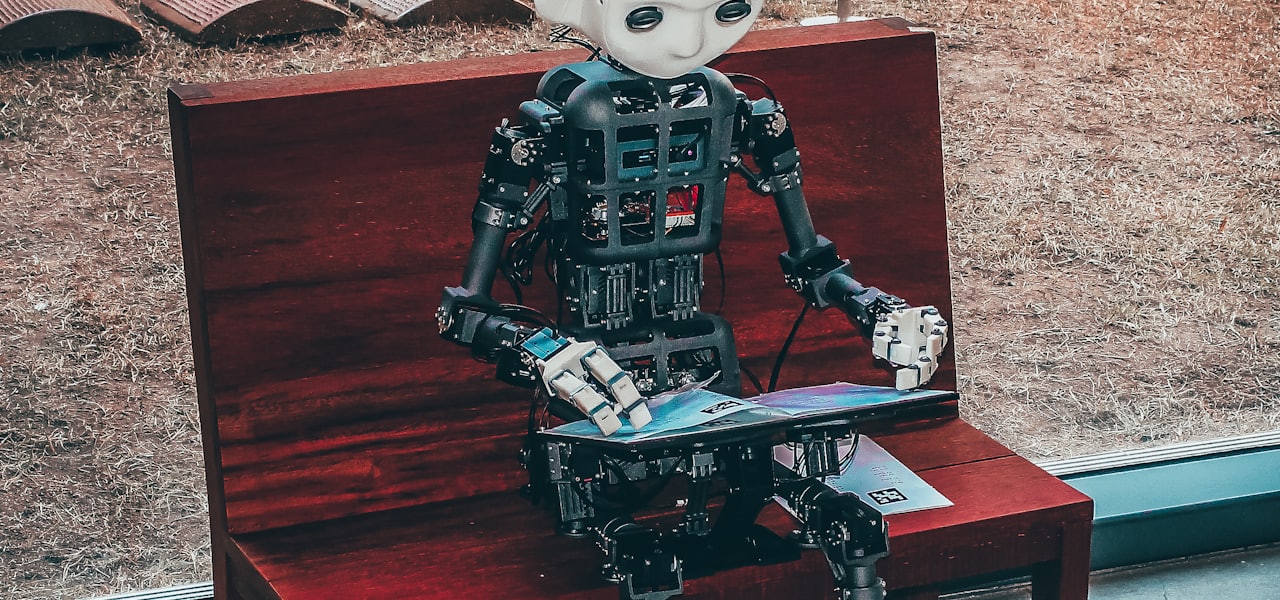
Artificial intelligence in education (often abbreviated as AIEd) is a subfield of educational technology that studies how to use artificial intelligence to create learning environments. Considerations in the field include data-driven decision-making, AI ethics, data privacy and AI literacy. Concerns include the potential for cheating, over-reliance, equity of access, reduced critical thinking, and the perpetuation of misinformation and bias. == History == Efforts to integrate AI into educational contexts have often followed technological advancement in the history of artificial intelligence. In the 1960s, educators and researchers began developing computer-based instruction systems, such as PLATO, developed by the University of Illinois. In the 1970s and 1980s, intelligent tutoring systems (ITS) were being adapted for classroom instruction. The International Artificial Intelligence in Education Society was founded in 1993. Coinciding with the AI boom of the 2020s, the use of large language models in the global north has been promoted and funded by venture capital and big tech. Companies creating AI services have targeted students and educational institutions as customers. Similarly, pre-AI boom educational companies have expanded their use of AI technologies. These commercial incentives for AIEd use may be related to a potential AI bubble. In the U.S., bipartisan support of AI development in K-12 education has been expressed, but specific implementations and best practices remain contentious. == Theory == AIEd applies theory from education studies, machine learning, and related fields. A 2019 review of the previous decade of studies found that most research prioritized technological design over pedagogical integration. Ouyang and Jiao (2021) propose three paradigms for AI in education, which follow roughly from least to most learner-centered and from requiring least to most technical complexity from the AI systems: AI-directed, learner-as-recipient: AIEd systems present a pre-set curriculum based on statistical patterns that do not adjust to learner's feedback. AI-supported, learner-as-collaborator: Systems that incorporate responsiveness to learner's feedback through, for example, natural language processing, wherein AI can support knowledge construction. AI-empowered, learner-as-leader: This model seeks to position AI as a supplement to human intelligence wherein learners take agency and AI provides consistent and actionable feedback. Some scholars place AI in education within a socio-technical framework. This positions AI alongside other emerging educational technologies, such as computing, the internet, and social media. The framework of Tsao, Heinrichs and Camit (2025) draws on new materialism and posthumanism, specifically Donna Haraway's concept of sympoiesis (making-with). This perspective views learning as an entanglement of human and non-human actors (students, teachers, and AI algorithms), where knowledge is co-composed in contact zones between human context and algorithmic prediction. AI agents have been trained on biased datasets, and thus continue to perpetuate societal biases. Since LLMs were created to produce human-like text, algorithmic bias can be introduced and reproduced. AI's data processing and monitoring reinforce neoliberal approaches to education rather than addressing inequalities. == Applications == Uses of generative AI chatbots in education have included assessment and feedback, machine translations, proof-reading exam question generation and copy editing, or as virtual assistants. Emotional AI in education is the study and development of systems that can detect learners' emotions or provide emotional support in learning. == Usage == === Schools and educators === Following the release of ChatGPT in November 2022, some schools and large school districts blocked access to the site and issued warnings that the use of such tools would be seen as cheating. Governmental and non-governmental organizations such as UNESCO, Article 4 of the European Union's AI Act, and the U.S. Department of Education have published reports advocating for specific AIEd approaches. National higher-education bodies have also published guidance on generative AI, including Ireland's Higher Education Authority, which issued a policy framework for higher education teaching and learning in December 2025. In 2024, UNESCO released updated global guidance for generative AI in education, emphasizing ethical use, teacher training, and data protection to ensure responsible integration of AI tools in learning environments. According to Taso (2025), policy implementation in higher education is interpreted and enacted differently by various organizations. These decentralized policies can lead to inconsistent enforcement and confusion among students regarding what constitutes acceptable use, with the burden of ethical navigation falling on individual teachers and students. AI integration in classrooms has created new forms of invisible labour for educators, who must navigate ambiguous policies, redesign assessments to be AI-resilient, and adjudicate potential academic integrity violations. The use of AI detection tools has also been criticised for creating an adversarial relationship between students and institutions, where students may be falsely accused of misconduct based on probabilistic software. AIEd advocates say that efforts should be made towards increasing global accessibility and training educators to serve underprivileged areas. === Students === Reliance on generative AI has been linked with reduced academic self-esteem and performance, and heightened learned helplessness. Algorithm errors and hallucinations are common flaws in AI agents, making them less trustworthy and reliable. According to a 2025 survey from Inside Higher Ed, 85% of higher education students use generative AI technology in some way, with 25% using AI to complete assignments for them. The most common reason cited for using AI to cheat was pressure to get high grades. 97% of students wanted some form of action from schools on the threat to academic integrity caused by AI, with the most popular options being clearer policies and more education about ethical uses of AI. In September 2025, The Atlantic published an op-ed from a high school senior arguing that the normalization of AI cheating was eroding critical thinking, academic integrity, creativity, and the shared student experience.
Something Big Is Happening
"Something Big Is Happening" is an essay by Matt Shumer, an AI entrepreneur, about the impact of artificial intelligence, published in February 2026, that has since been reportedly viewed more than 80 million times and widely discussed. Shumer noted that the technology has crossed an important threshold, where AI has become capable of creating self-improving systems. Referring to one the most recent AI models, he wrote: "It was making intelligent decisions. It had something that felt, for the first time, like judgment. Like taste." Speaking to CNBC's Power Lunch, Shumer said that his "core message" is "people in the workforce should start to use and experiment with AI tools so they can understand what’s coming". Even as the essay was widely shared and discussed, the essay also elicited criticism. Paulo Carvao, in an essay published by the Forbes Magazine stated that some of his advice is sound, but added: "It reads at times like a sales pitch. He urges readers to subscribe to the most advanced AI tools. He implies that those with access to premium models will outpace those without. He frames paid AI subscriptions as a form of insurance against obsolescence." Writing in The Guardian, Dan Milmo and Aisha Down mentioned Shumer as having a history of AI hype and stated, "He previously excited the internet by announcing the release of the world's "top open-source model", which it was not". Many workers in the technology sector criticized the article in blog posts shared on Hacker News; Edward Zitron commented that "while coding LLMs can test products, or scan/fix some bugs, this suggests they A) do this autonomously without human input, B) they do this correctly every time (or ever!)." In an article alluding to Shumer's original post, Ari Colaprete wrote "the LLM is fundamentally a writing machine, it does everything via text, and if you make it produce writing that exists purely to serve some sort of mechanical function, and you train it to succeed in that task, then it will tend to do so, even with vast intricacy."
Georges Giralt PhD Award
The Georges Giralt PhD Award is a European scientific prize for extraordinary contributions to robotics. It is awarded yearly at the European Robotics Forum by euRobotics AISBL, a non-profit organisation based in Brussels with the objective of turning robotics beneficial for Europe’s economy and society. Georges Giralt received his PhD in 1958, from Paul Sabatier University, in the domain of electrical machines, and soon afterwards became a pioneer in robotics, in Europe and worldwide. He was especially instrumental in bringing in scientific foundations and methodology when the domain was still young, and a loose coupling of mechanical and electrical engineering, adopting the early results of automatic control. The high reputation of the Georges Giralt PhD Award is based on the prominent role of the awarding institution euRobotics. With more than 250 member organisations, euRobotics represents the academic and industrial robotics community in Europe. Moreover, it provides the European robotics community with a legal entity to engage in a public/private partnership with the European Commission. The award is covered by various media. Entitled for participation in the Georges Giralt PhD Award are all robotics-related dissertations which have been successfully defended at a European university. The US-American counterpart is the Dick Volz Award. == Award winners == 2026: Antonio González Morgado 2025: Erfan Shahriari 2024: Manuel Keppler 2023: Antonio Andriella, Ribin Balachandran 2022: Antonio Loquercio, Michael Lutter 2021: Giuseppe Averta, Bernd Henze 2020: Cosimo Della Santina 2019: Grazioso Stanislao, Teodor Tomic 2018: Frank Bonnet, Daniel Leidner 2017: Johannes Englsberger 2016: Alexander Dietrich, Mark Müller 2015: Jörg Stückler 2014: Manuel Catalano, Fabien Expert, Rainer Jaekel 2013: Jens Kober 2012: Sami Haddadin 2011: Mario Pratts 2010: Ludovic Righetti 2009: Alejandro-Dizan Vasquez-Govea 2008: Cyrill Stachniss, Eduardo Rocon 2007: Pierre Lamon 2006: Martijn Wisse 2005: Juan Andrade Cetto 2004: Gilles Duchemin 2003: Ralf Koeppe 2002: Gianluca Antonelli, Jens-Steffen Gutmann
Tresorit
Tresorit is a Swiss company providing end-to-end encrypted cloud storage and secure content collaboration services. Founded in 2011, the company primarily serves businesses and organizations with elevated data protection and compliance requirements. Since 2021, Tresorit has been part of Swiss Post's digital business services, which, under the name 'Swiss Post Digital' offer secure communication platforms and connectable software solutions for SMEs, public authorities, and the healthcare sector, among others. == History == Tresorit was founded in 2011 by Hungarian software developers Istvan Lam, Szilveszter Szebeni and Gyorgy Szilagyi with the aim of providing a secure alternative to traditional cloud storage solutions. The company developed a cloud collaboration platform based on client-side end-to-end encryption and a zero-knowledge architecture. In its early years, Tresorit gained attention through a public security challenge inviting researchers to attempt to compromise its encryption system. The initiative received coverage in technology and cybersecurity media. The company initially positioned itself as a secure alternative to conventional cloud storage services and gradually expanded its offering toward enterprise-focused collaboration tools. In 2021, Swiss Post Communications Services acquired a majority stake in Tresorit. The company is now part of Swiss Post, and continues to operate independently within Swiss Post’s digital division, while benefiting from the broader infrastructure and institutional framework of its parent organization. Tresorit has offices in Zurich, Munich, and Budapest. == Products and Services == Tresorit provides a cloud-based platform for secure file storage and collaboration. Its services include encrypted file sharing, email encryption, electronic signatures, and encrypted data rooms for managing sensitive documents and workflows. The platform is available on Windows, macOS, Linux, Android, and iOS. == Technology == Tresorit uses client-side end-to-end encryption based on a zero-knowledge model. Files are encrypted on the user’s device before being uploaded to company servers. According to the company, encryption keys remain under user control, meaning that Tresorit and third parties cannot access the content of stored files. == Security challenge == Between 2013 and 2014, Tresorit organized a public challenge inviting security researchers to attempt to compromise the service's encryption implementation. The challenge received coverage in technology and cybersecurity media. == Acquisition by Swiss Post == In 2021, Swiss Post Communications Services acquired a majority stake in Tresorit as part of Swiss Post’s broader digital services strategy. The company is now part of Swiss Post. == Reception == Tresorit has been covered by international technology and business publications in the context of secure cloud storage and encrypted collaboration services. TechCrunch described the company as an early European provider of end-to-end encrypted cloud services, while The New York Times included it in discussions of secure file-sharing tools. Other publications such as TechRadar and ITPro have reviewed Tresorit in the context of enterprise security and confidential data handling.
Video browsing
Video browsing, also known as exploratory video search, is the interactive process of skimming through video content in order to satisfy some information need or to interactively check if the video content is relevant. While originally proposed to help users inspecting a single video through visual thumbnails, modern video browsing tools enable users to quickly find desired information in a video archive by iterative human–computer interaction through an exploratory search approach. Many of these tools presume a smart user that wants features to interactively inspect video content, as well as automatic content filtering features. For that purpose, several video interaction features are usually provided, such as sophisticated navigation in video or search by a content-based query. Video browsing tools often build on lower-level video content analysis, such as shot transition detection, keyframe extraction, semantic concept detection, and create a structured content overview of the video file or video archive. Furthermore, they usually provide sophisticated navigation features, such as advanced timelines, visual seeker bars or a list of selected thumbnails, as well as means for content querying. Examples of content queries are shot filtering through visual concepts (e.g., only shots showing cars), through some specific characteristics (e.g., color or motion filtering), through user-provided sketches (e.g., a visually drawn sketch), or through content-based similarity search. == History == Video browsing was originally proposed by Iranian engineer Farshid Arman, Taiwanese computer scientist Arding Hsu, and computer scientist Ming-Yee Chiu, while working at Siemens, and it was presented at the ACM International Conference in August 1993. They described a shot detection algorithm for compressed video that was originally encoded with discrete cosine transform (DCT) video coding standards such as JPEG, MPEG and H.26x. The basic idea was that, since the DCT coefficients are mathematically related to the spatial domain and represent the content of each frame, they can be used to detect the differences between video frames. In the algorithm, a subset of blocks in a frame and a subset of DCT coefficients for each block are used as motion vector representation for the frame. By operating on compressed DCT representations, the algorithm significantly reduces the computational requirements for decompression and enables effective video browsing. The algorithm represents separate shots of a video sequence by an r-frame, a thumbnail of the shot framed by a motion tracking region. A variation of this concept was later adopted for QBIC video content mosaics, where each r-frame is a salient still from the shot it represents. === Video Notebook === Modern video browsing solutions include Video Notebook, a Menlo Park startup founded in 2021 by Mike Lanza, which uses computer vision to extract slides and optical character recognition and speech recognition to facilitate video search. The software can be either used on the client side (using a browser extension), where the slides and text are extracted while the video is watched (e.g. on a video platform like YouTube or Udemy), or on the server side. Processed videos, which can be viewed in the Video Notebook web app, feature a video browsing user interface with extracted timestamped slides, a search bar for querying the video (or a collection of videos), and text chapters. Video Notebook customers include organisations like Ernst & Young. === Video Browser Showdown === The Video Browser Showdown (VBS) is an annual live evaluation competition for exploratory video search tools, where international researchers use video browsing tools to solve ad-hoc video search tasks on a moderately large data set as fast as possible. The main goal of the VBS, which started in 2012 at the International Conference on MultiMedia Modeling (MMM), is to advance the performance of video browsing tools. Since 2016, the VBS also collaborates with TRECVID. The aim of the VBS is to evaluate video browsing tools for efficiency at known-item search (KIS) tasks with a well-defined data set in direct comparison to other tools.
Data exploration
Data exploration is an approach similar to initial data analysis, whereby a data analyst uses visual exploration to understand what is in a dataset and the characteristics of the data, rather than through traditional data management systems. These characteristics can include size or amount of data, completeness of the data, correctness of the data, possible relationships amongst data elements or files/tables in the data. Data exploration is typically conducted using a combination of automated and manual activities. Automated activities can include data profiling or data visualization or tabular reports to give the analyst an initial view into the data and an understanding of key characteristics. This is often followed by manual drill-down or filtering of the data to identify anomalies or patterns identified through the automated actions. Data exploration can also require manual scripting and queries into the data (e.g. using languages such as SQL or R) or using spreadsheets or similar tools to view the raw data. All of these activities are aimed at creating a mental model and understanding of the data in the mind of the analyst, and defining basic metadata (statistics, structure, relationships) for the data set that can be used in further analysis. Once this initial understanding of the data is had, the data can be pruned or refined by removing unusable parts of the data (data cleansing), correcting poorly formatted elements and defining relevant relationships across datasets. This process is also known as determining data quality. Data exploration can also refer to the ad hoc querying or visualization of data to identify potential relationships or insights that may be hidden in the data and does not require to formulate assumptions beforehand. Traditionally, this had been a key area of focus for statisticians, with John Tukey being a key evangelist in the field. Today, data exploration is more widespread and is the focus of data analysts and data scientists; the latter being a relatively new role within enterprises and larger organizations. == Interactive Data Exploration == This area of data exploration has become an area of interest in the field of machine learning. This is a relatively new field and is still evolving. As its most basic level, a machine-learning algorithm can be fed a data set and can be used to identify whether a hypothesis is true based on the dataset. Common machine learning algorithms can focus on identifying specific patterns in the data. Many common patterns include regression and classification or clustering, but there are many possible patterns and algorithms that can be applied to data via machine learning. By employing machine learning, it is possible to find patterns or relationships in the data that would be difficult or impossible to find via manual inspection, trial and error or traditional exploration techniques. == Software == Trifacta – a data preparation and analysis platform Paxata – self-service data preparation software Alteryx – data blending and advanced data analytics software Microsoft Power BI - interactive visualization and data analysis tool OpenRefine - a standalone open source desktop application for data clean-up and data transformation Tableau software – interactive data visualization software
Tresorit
Tresorit is a Swiss company providing end-to-end encrypted cloud storage and secure content collaboration services. Founded in 2011, the company primarily serves businesses and organizations with elevated data protection and compliance requirements. Since 2021, Tresorit has been part of Swiss Post's digital business services, which, under the name 'Swiss Post Digital' offer secure communication platforms and connectable software solutions for SMEs, public authorities, and the healthcare sector, among others. == History == Tresorit was founded in 2011 by Hungarian software developers Istvan Lam, Szilveszter Szebeni and Gyorgy Szilagyi with the aim of providing a secure alternative to traditional cloud storage solutions. The company developed a cloud collaboration platform based on client-side end-to-end encryption and a zero-knowledge architecture. In its early years, Tresorit gained attention through a public security challenge inviting researchers to attempt to compromise its encryption system. The initiative received coverage in technology and cybersecurity media. The company initially positioned itself as a secure alternative to conventional cloud storage services and gradually expanded its offering toward enterprise-focused collaboration tools. In 2021, Swiss Post Communications Services acquired a majority stake in Tresorit. The company is now part of Swiss Post, and continues to operate independently within Swiss Post’s digital division, while benefiting from the broader infrastructure and institutional framework of its parent organization. Tresorit has offices in Zurich, Munich, and Budapest. == Products and Services == Tresorit provides a cloud-based platform for secure file storage and collaboration. Its services include encrypted file sharing, email encryption, electronic signatures, and encrypted data rooms for managing sensitive documents and workflows. The platform is available on Windows, macOS, Linux, Android, and iOS. == Technology == Tresorit uses client-side end-to-end encryption based on a zero-knowledge model. Files are encrypted on the user’s device before being uploaded to company servers. According to the company, encryption keys remain under user control, meaning that Tresorit and third parties cannot access the content of stored files. == Security challenge == Between 2013 and 2014, Tresorit organized a public challenge inviting security researchers to attempt to compromise the service's encryption implementation. The challenge received coverage in technology and cybersecurity media. == Acquisition by Swiss Post == In 2021, Swiss Post Communications Services acquired a majority stake in Tresorit as part of Swiss Post’s broader digital services strategy. The company is now part of Swiss Post. == Reception == Tresorit has been covered by international technology and business publications in the context of secure cloud storage and encrypted collaboration services. TechCrunch described the company as an early European provider of end-to-end encrypted cloud services, while The New York Times included it in discussions of secure file-sharing tools. Other publications such as TechRadar and ITPro have reviewed Tresorit in the context of enterprise security and confidential data handling.